News · October 28, 2026
Ten Harvests to Create a Traditional Method Sparkling Wine
Giuseppe Venturini shares the story behind Villa Crine’s first Blanc de Noirs: ten harvests of curiosity, learning and experimentation.
It all began with curiosity. For years, I had been tasting traditional method sparkling wines from different regions of Italy and France, trying to understand what lay behind each bottle. The more I discovered, the more I wanted to try producing one at Villa Crine.
Working in Valpolicella, a region deeply rooted in the tradition of great red wines, I knew it would not be easy. Ten harvests ago, I began my first experiments, aiming to create a base wine suitable for secondary fermentation in the bottle. The initial results were disappointing, but every mistake became a lesson to put into practice the following year.
I chose Molinara, a traditional Valpolicella grape variety grown in one of our vineyards, where the temperature difference between day and night provides favourable ripening conditions. My idea was to create a Blanc de Noirs, a white sparkling wine made from red grapes, using only a small proportion of the juice obtained through particularly gentle pressing.
It took several harvests to understand just how important the timing of the harvest and the precision of the pressing process were. Refining these two aspects marked a decisive turning point in the quality of the wine.
Meanwhile, I continued studying, visiting wineries and exchanging ideas with producers in Italy and France. Through Assoenologi, the Italian association of winemakers, I also had the opportunity to meet experienced professionals whose advice helped me refine my approach.
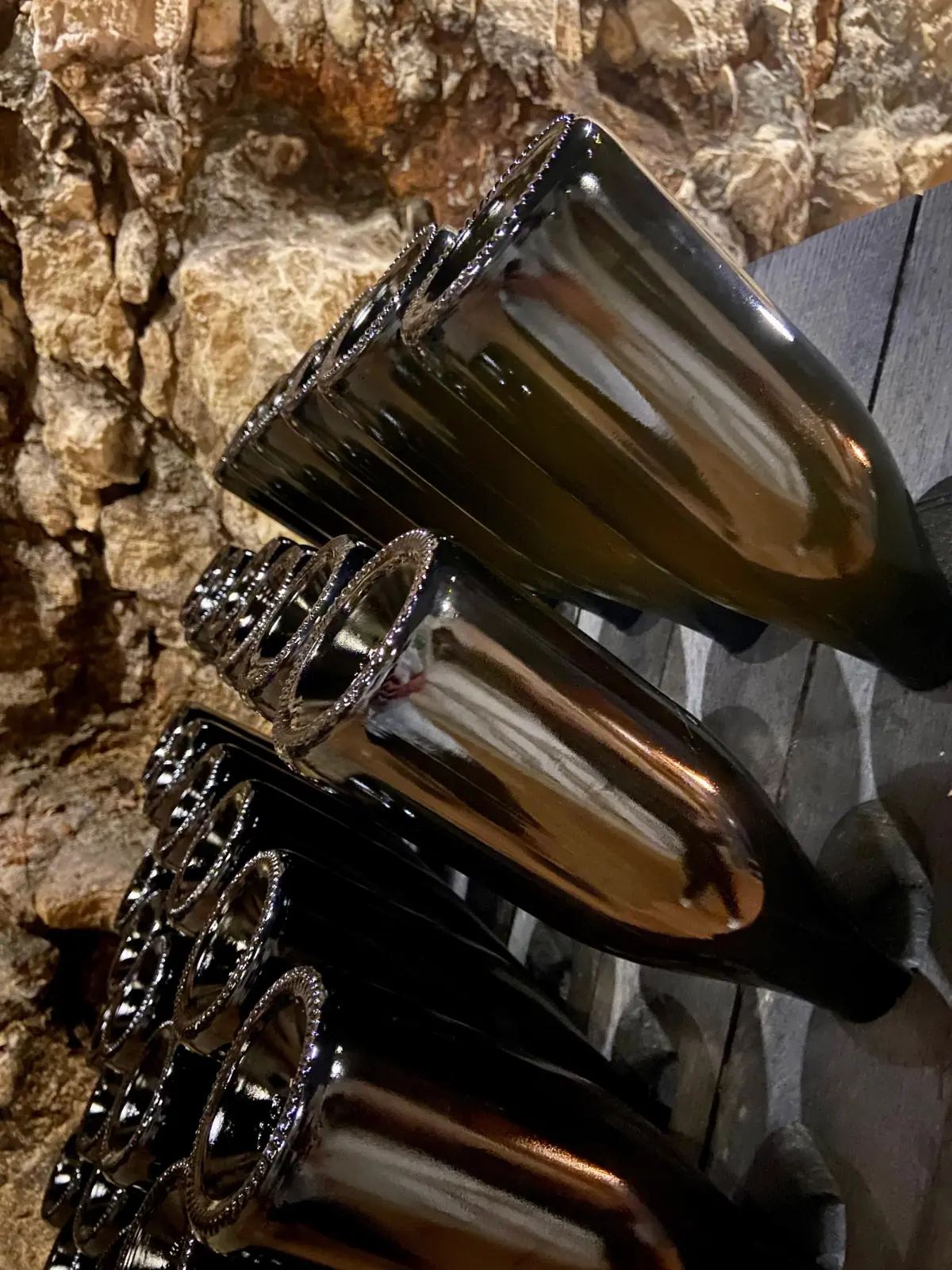
Today, the first release of Villa Crine Metodo Classico is ready after 30 months of ageing on the lees, with the bottles resting in the historic cellar beneath our villa. The result is a balanced sparkling wine, with refreshing acidity and a distinctive savoury character, revealing a different expression of Molinara.
What fascinates me most is how much this wine, despite being so different from Amarone, ultimately has in common with it. One is made from dried grapes and undergoes long ageing in oak; the other begins as a delicate white base wine and slowly develops through secondary fermentation and ageing on the lees.
Both require precision, patience and, above all, time.
After ten harvests, perhaps the greatest satisfaction is having discovered a new expression of our grapes without moving away from the way we have always understood winemaking at Villa Crine.
Giuseppe Venturini — Winemaker, Villa Crine