News · November 18, 2026
The Art of Grape Drying: Between Tradition and Transformation
The Amarone grape drying process at Villa Crine, from traditional bamboo racks to modern drying rooms and the development of complex aromas.
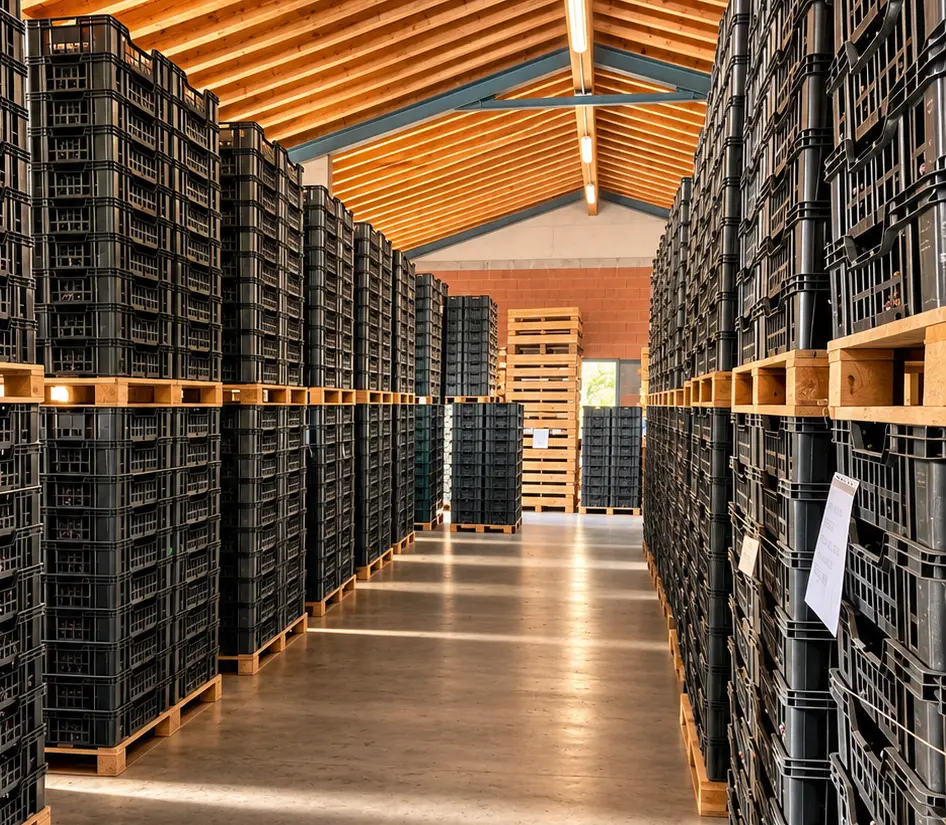
The traditional grape drying process, known as appassimento, is one of the most distinctive practices in Valpolicella winemaking, deeply connected to the production of Amarone della Valpolicella and Recioto. This centuries-old technique has evolved over time while preserving its fundamental principles.
In the past, at Villa Crine, grapes were dried in the attic granaries of the historic villa, where the bunches were carefully laid on traditional arele, bamboo racks originally used for silkworm farming. Silkworms were fed mulberry leaves, from trees known locally in the Veronese dialect as morari, and raised until they produced the precious cocoons from which silk thread was obtained. This tradition reflects a rural economy in which the same spaces and tools served different purposes according to the seasons. At Villa Crine, we still preserve part of this heritage, a tangible connection to the agricultural traditions of our family and the Valpolicella region.
Today, the appassimento process takes place in specially designed drying rooms, where knowledge of natural processes is combined with experience acquired over generations. Our drying room, known as the fruttaio, was built with a distinctive long and narrow layout, designed to encourage airflow from the far end towards the entrance. This arrangement helps direct humid air outside, reducing moisture accumulation and promoting continuous air exchange. When necessary, natural ventilation is supported by mechanical systems to maintain suitable conditions for preserving the grapes and allowing their gradual dehydration.
But what actually happens inside the grapes during these months?
It is widely known that grape drying involves a progressive loss of water from the berries, resulting in a higher concentration of sugars and other naturally occurring compounds. This contributes to the full body and high alcohol content typically associated with Amarone. However, what makes this process particularly fascinating goes far beyond simple dehydration.
Even after harvesting, grapes continue to undergo important transformations. Water loss triggers natural biochemical reactions that modify the aromatic composition of the berries, encouraging the formation and evolution of compounds that contribute to the complexity of the finished wine. These changes help Amarone develop its characteristic aromas of ripe fruit, spices and subtle balsamic notes.
The appassimento process is therefore not simply about concentration, but about achieving a delicate balance between time, temperature, humidity and ventilation. Every vintage presents different conditions and requires careful attention to ensure that the grapes undergo this transformation in the best possible environment.
At Villa Crine, grapes carefully selected from our own vineyards generally undergo a drying period of three to four months. It is a process that brings together a tradition passed down through generations and an understanding of the natural transformations that contribute to the creation of a great wine.
Because the complexity of a great Amarone comes not only from the concentration of sugars, but also from the transformations made possible by time, nature and experience.